
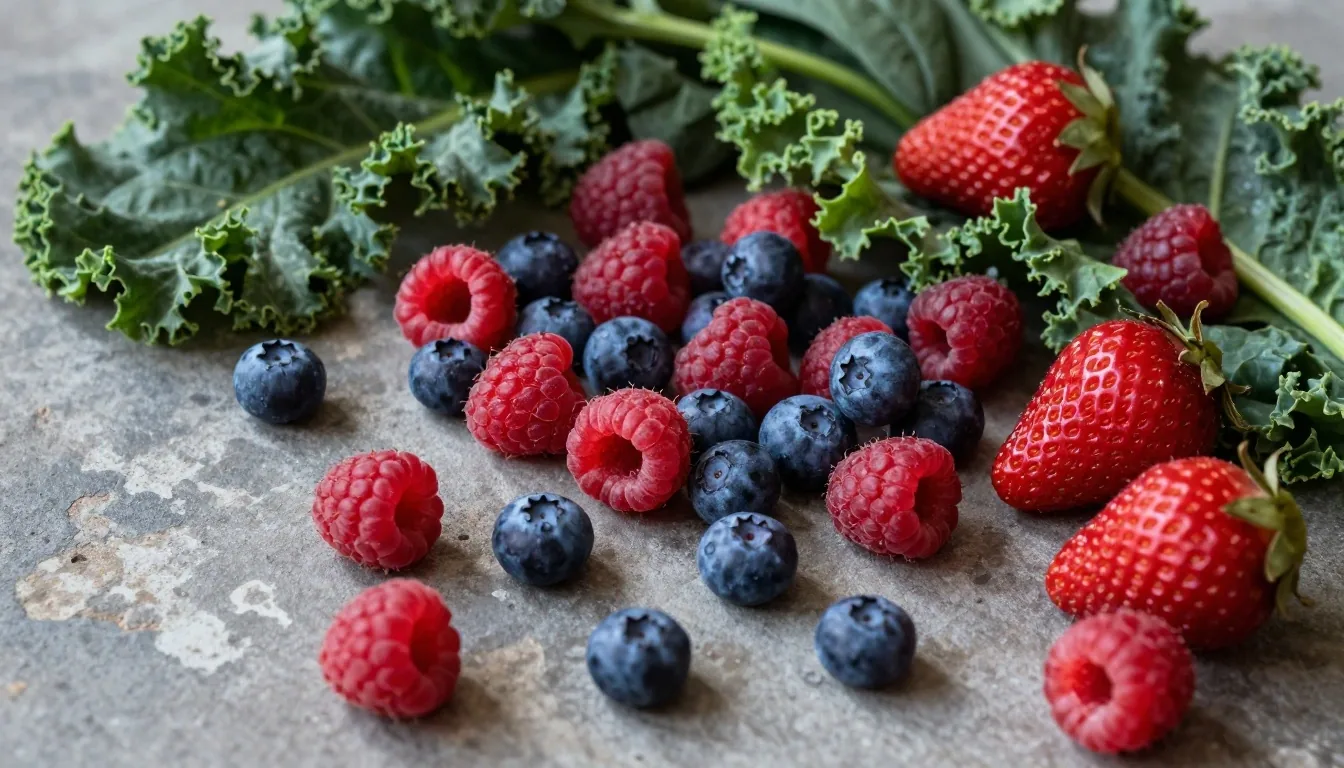
Nutrients in berries and vegetables that support eye wellness
Four compounds — lutein, beta-carotene, vitamin C, and zeaxanthin — occur naturally in everyday foods. Each plays a different role in keeping your eyes comfortable and functional. We explain what food contains and why it matters.
Four nutrients, one plate of food
This guide focuses on four compounds found in everyday berries and vegetables: lutein, beta-carotene, vitamin C, and zeaxanthin. Each occurs naturally in foods you can buy at a Rosebank market stall or grow in a backyard garden. Each plays a different role in keeping your eyes comfortable and functional — from supporting the retina to maintaining the small blood vessels that supply the eye.
We do not recommend supplements. We explain what food contains, how cooking affects those compounds, and why a varied plate gives you more than any single ingredient can. The nutrients below are presented in the order you are most likely to encounter them at a produce stall — leafy greens first, then orange roots, then berries and peppers.
Lutein
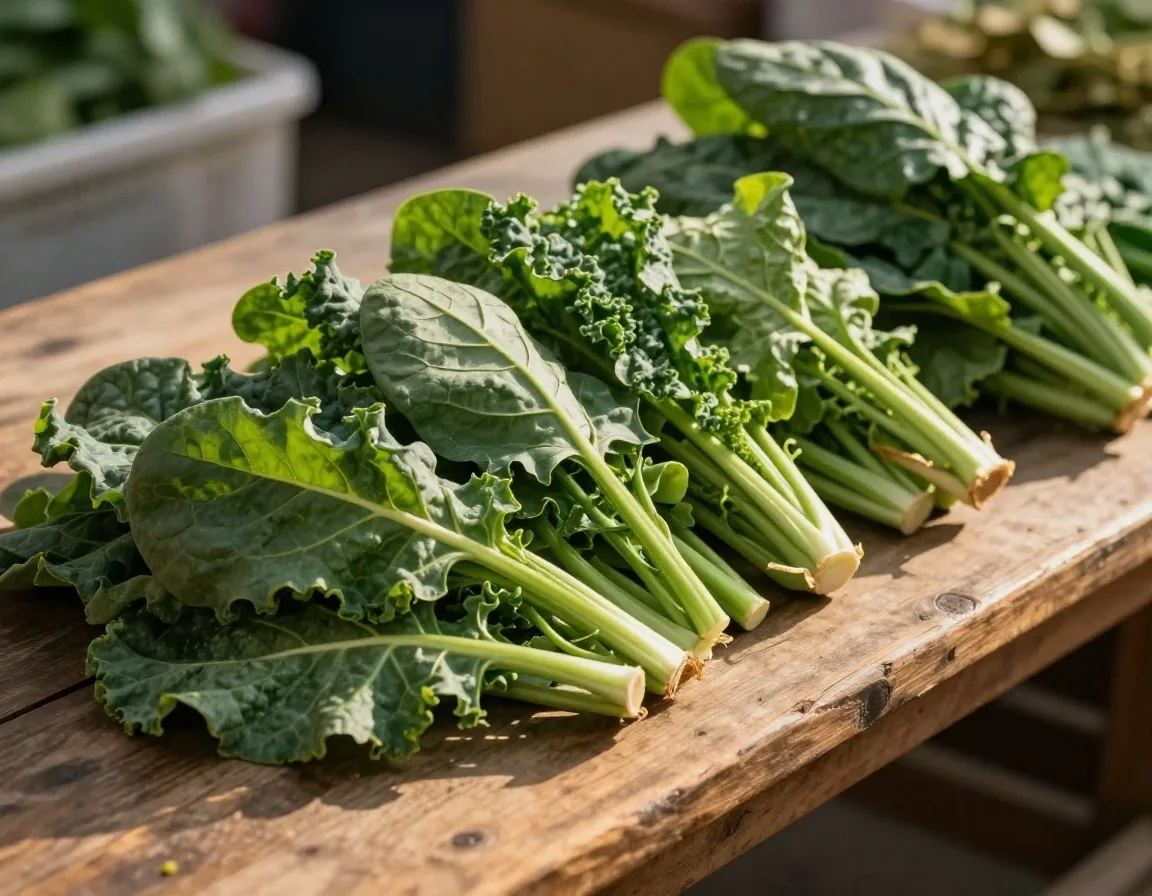
Lutein is a yellow pigment found naturally in dark leafy greens such as spinach and kale, as well as in egg yolks. It belongs to a group of plant compounds called carotenoids — pigments your body can absorb and use. Lutein accumulates in the retina, particularly in the macula, the area responsible for detailed central vision.
Getting lutein from food is straightforward. A single serving of cooked spinach provides a meaningful amount. Cooking spinach with a little oil helps your body absorb lutein more effectively than eating it raw, because lutein is fat-soluble — it travels into your bloodstream alongside dietary fa.
Kale, Swiss chard, and collard greens carry similar amounts. If you rotate between two or three of these greens across a week, you build a steady intake without thinking about exact quantities.
Beta-carotene
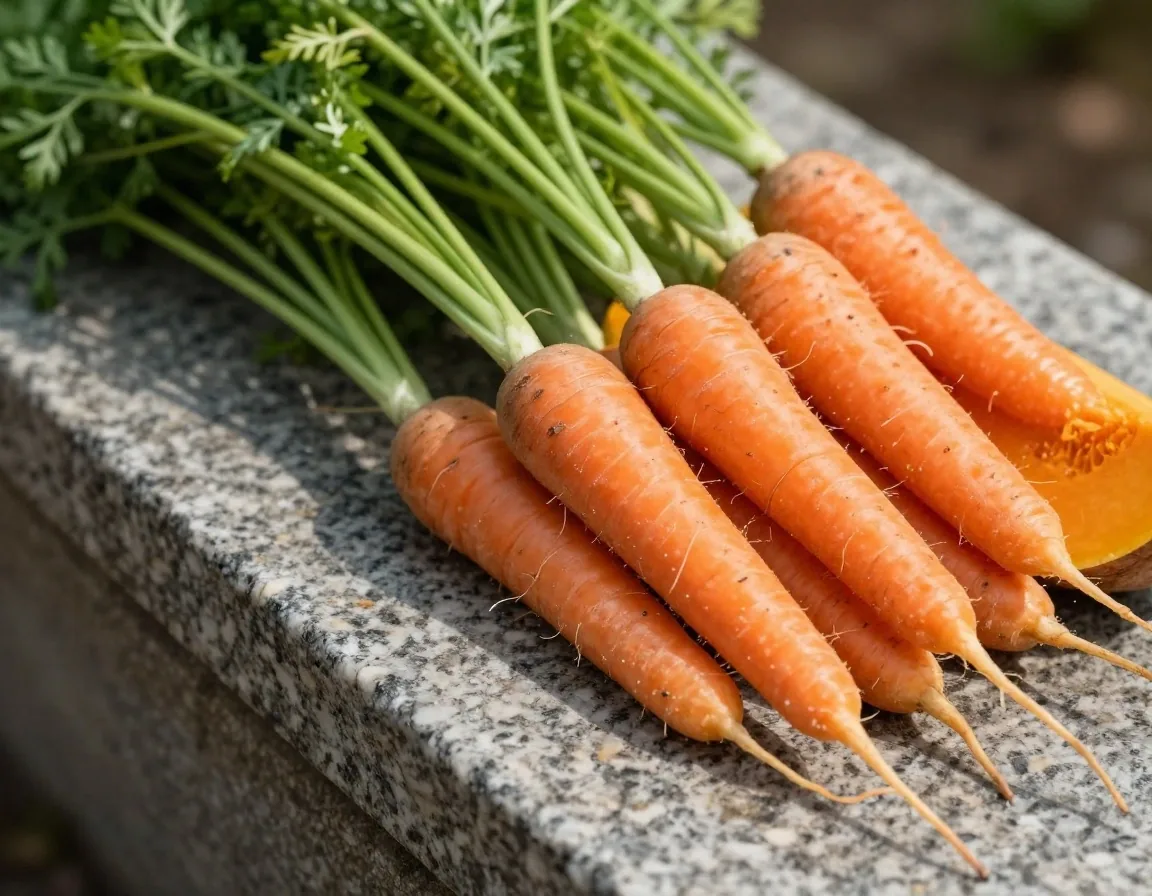
Beta-carotene is the orange pigment found in carrots, sweet potatoes, pumpkin, and butternut. Your body converts it into vitamin A as needed, and vitamin A plays a role in the function of the retina, particularly in low-light vision. This is the compound behind the familiar connection between carrots and seeing in the dark — there is a kernel of truth to it, though the effect is part of a broader picture rather than a single-food fix.
The conversion rate varies from person to person, and eating beta-carotene-rich foods with a small amount of fa improves absorption. You cannot easily overdose on beta-carotene from food, though very high intake from carrots can cause a harmless yellowing of the skin called carotenemia, which fades when you reduce your intake.
Roasting carrots or pumpkin with olive oil is a simple way to pair the nutrient with fa. The heat softens the vegetable walls and makes the beta-carotene more available to your body.
Vitamin C
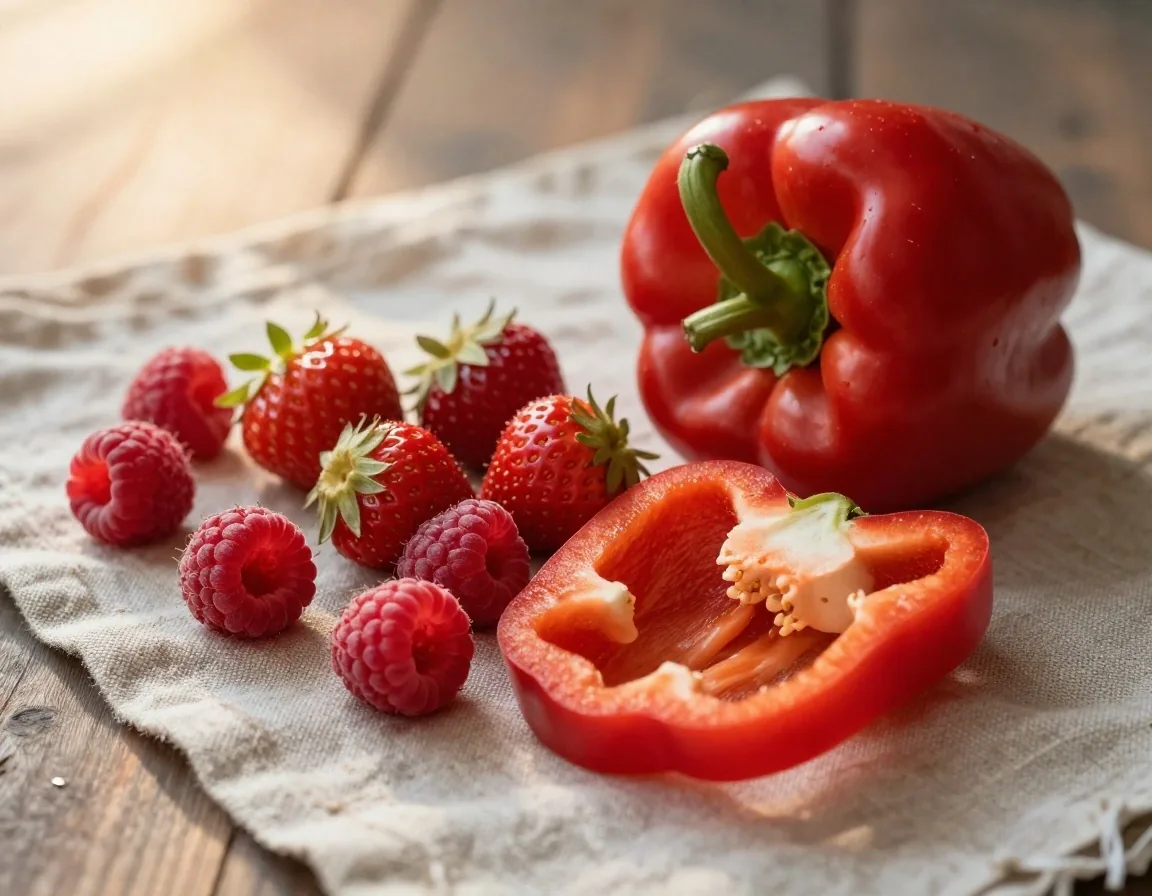
Vitamin C is found in berries, red bell peppers, and many other fruits and vegetables. It supports the structure of blood vessels throughout the body, including those in the eye. Cooking reduces vitamin C content because it is water-soluble and sensitive to heat, so raw or lightly cooked vegetables retain more of it.
Strawberries, raspberries, and raw red peppers are particularly good sources. Frozen berries also retain most of their vitamin C because they are frozen shortly after picking — often within hours — which locks in the nutrient before it can degrade.
A bowl of fresh strawberries with breakfast, a side of raw pepper strips at lunch, and a handful of frozen raspberries blended into a smoothie cover a solid daily intake without any single food doing all the work.
Zeaxanthin
Zeaxanthin is closely related to lutein and is found in many of the same foods — particularly kale, spinach, and goji berries. Like lutein, it accumulates in the retina and is one of the pigments that give the macula its yellow colour. The two compounds are often discussed together because they work in the same area of the eye.
Eating a variety of dark green vegetables and orange produce ensures you get both, as well as the other nutrients that accompany them. You do not need to eat goji berries specifically — a weekly rotation of kale, spinach, and Swiss chard covers the same ground. Goji berries are a useful addition if you enjoy them, but they are not the only path to a steady zeaxanthin intake.
The practical takeaway is simple: if you are already eating leafy greens for lutein, you are getting zeaxanthin from the same plate. The two nutrients arrive together in food, which is why a varied vegetable intake does more than targeting any single compound.
Anthocyanins
Where they come from
Anthocyanins are the pigments responsible for the red, purple, and blue colours of blueberries, blackberries, and raspberries. They are part of the broader picture of why deeply coloured fruits and vegetables are associated with wellness.
Heat sensitivity
Anthocyanins are sensitive to heat, so raw or frozen berries retain more of them than baked or cooked ones. A handful of frozen blueberries added to a smoothie keeps more pigment than the same amount baked into a muffin.
Why colour matters
Anthocyanins are less directly studied in relation to the eye than lutein or beta-carotene, but they are part of the reason a colourful plate is a practical habit. The pigment itself is a signal that the fruit carries a range of plant compounds.
How these nutrients work together
No single nutrient is responsible for eye wellness on its own. Lutein and zeaxanthin accumulate in the retina. Beta-carotene supports general retinal function through vitamin A conversion. Vitamin C contributes to the structural integrity of blood vessels. Each compound plays a different part, and the parts do not substitute for one another.
Eating a variety of colourful vegetables and berries gives you all of these compounds in the proportions that occur naturally in food. A spinach salad with grated carrot, sliced red pepper, and a handful of blueberries covers lutein, zeaxanthin, beta-carotene, vitamin C, and anthocyanins in a single bowl — not because any one ingredient is special, but because the combination is what food actually looks like.
This is why we recommend variety rather than focusing on a single vegetable or berry. The nutrients arrive together in whole foods, and the proportions between them are part of what makes a mixed plate useful.
Realistic expectations from food
Getting nutrients from food is a long-term habit, not a quick fix. Eating spinach once will not change anything. Eating it regularly over months and years contributes to your overall nutrient intake. The same applies to carrots, berries, and every other food on this blog.
We do not claim that any vegetable or berry will improve your vision. We explain what the nutrients do and where to find them, and we leave it to you to build the habit. A weekly shop that includes leafy greens, orange roots, and a punnet of berries is a practical starting point — not a prescription.
The nutrients in this guide are not stored in large amounts by the body. Vitamin C is water-soluble and needs regular replenishing. Lutein and zeaxanthin accumulate slowly in the retina over time. Beta-carotene is converted as needed rather than held in reserve. This is why consistency matters more than quantity on any single day.
If you miss a day or a week, nothing dramatic happens. The habit is what carries the intake, not any single meal.
Why we focus on food, not supplements
Supplements are widely marketed for eye wellness, and some contain the same nutrients found in the foods we write about. However, supplements are not regulated the same way as food, and their quality varies. Food also provides fibre, water, and dozens of other compounds that supplements do not.
A plate of spinach with olive oil gives you lutein alongside fibre, vitamin K, folate, and iron. A pill gives you lutein and nothing else. For most people, food is the simpler and more reliable choice — and it is the one we can write about with confidence because the ingredients are visible, measurable, and available at a market stall.
If you have a specific dietary restriction that makes it hard to eat leafy greens or orange vegetables, a conversation with a registered dietitian is a more useful next step than browsing supplement shelves. We can help you find fresh produce suppliers in your area — the rest is between you and your plate.
Questions about nutrients and food
Do I need to eat these foods every day?
No. The nutrients in this guide are part of a long-term pattern, not a daily quota. Eating leafy greens, orange vegetables, and berries a few times a week across months and years is what builds a steady intake. Missing a day or a week does not undo the habit.
Does cooking destroy the nutrients?
Cooking affects different nutrients in different ways. Vitamin C and anthocyanins are sensitive to heat, so raw or lightly cooked produce retains more. Lutein and beta-carotene are more available after cooking, especially with a little oil. A mix of raw and cooked vegetables across the week covers both cases.
Are frozen berries as good as fresh?
For vitamin C and anthocyanins, frozen berries can be equal or better than fresh. They are frozen shortly after picking, which locks in nutrients before they degrade. Fresh berries that have sat on a shelf for several days may have lost more than a frozen punnet picked at the same time.
Should I take a supplement instead?
We do not recommend supplements. Food provides lutein, beta-carotene, vitamin C, and zeaxanthin alongside fibre, water, and dozens of other compounds that a pill does not contain. Supplements are also not regulated the same way as food. For most people, a varied plate is the simpler and more reliable choice.
Can I get these nutrients from South African produce?
Yes. Spinach, kale, carrots, sweet potatoes, pumpkin, butternut, strawberries, raspberries, and blueberries are all grown in South Africa and available at markets and greengrocers. Our supplier directory lists fresh produce sources in the Rosebank and wider Johannesburg area.
Find these nutrients at a market stall near you
Browse our berry and vegetable guides for specific produce, or find fresh suppliers in the Rosebank and Johannesburg area who stock the ingredients in this guide.