


Berry & Vision Berry & Vision
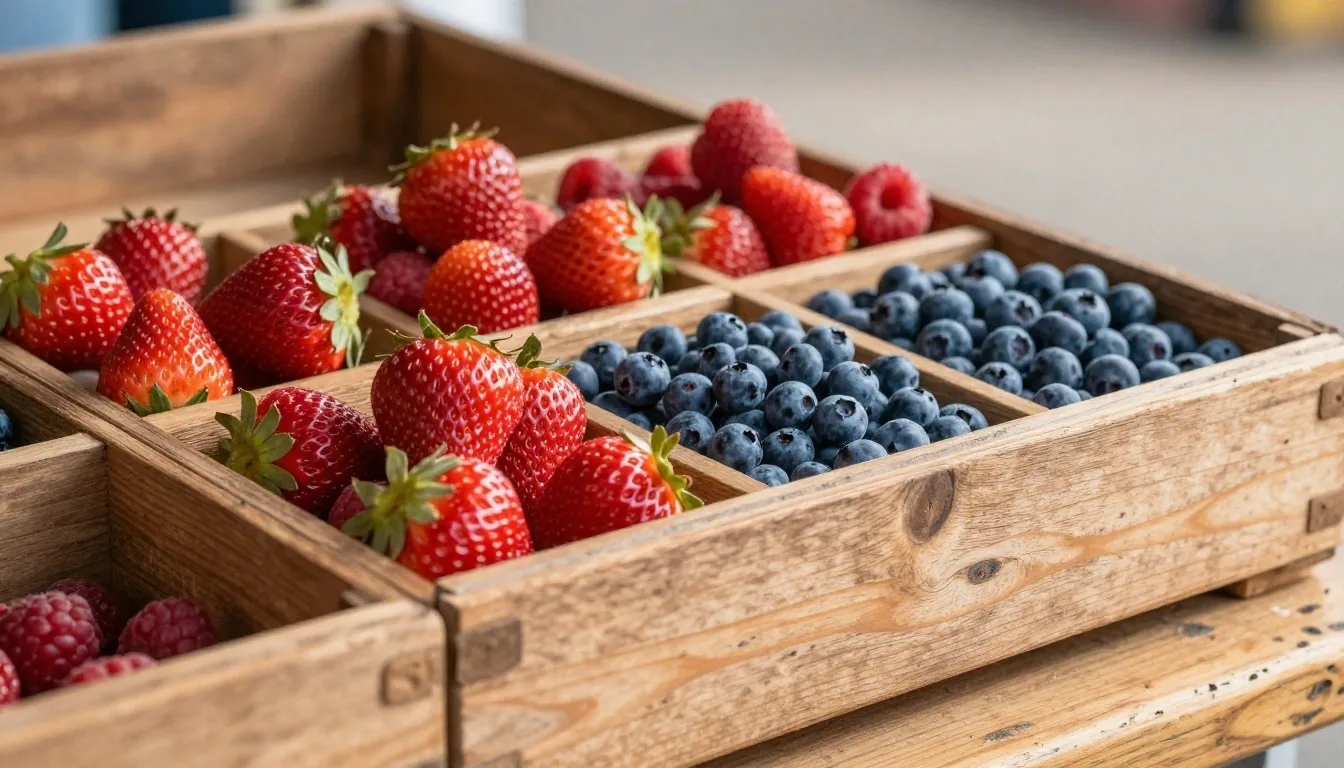
A crate of mixed berries on a wooden market table

Berry & Vision — South African produce guides

BERRY GUIDES

Berry guides for everyday eye wellness

Each guide takes a single berry and explains its nutrients, where it grows in South Africa, and how to use it in the kitchen. Start with blueberries for something familiar, or goji berries for something less common.

How these berry guides work

Nutrient profile

Each guide opens with what the berry contains — anthocyanins, vitamin C, beta-carotene, dietary fibre, and other natural compounds found in the fruit — so you know why it appears in an eye-wellness blog.

Where it grows

We note whether the berry is grown locally or imported, which South African provinces produce it, when harvests peak, and where you are likely to find it — fresh, frozen, or dried.

Kitchen use

Practical ideas for each berry — whether to eat it fresh, blend it into a smoothie, bake it, steep it in tea, or cook it into a compote. No special equipment, just ordinary kitchen steps.

Fresh blueberries in a wooden bowl

Most widely consumed

Blueberries

Blueberries contain anthocyanins — the pigments that give the fruit its blue-purple colour — along with vitamin C and dietary fibre. In South Africa, they are grown primarily in the Western Cape and Limpopo, with harvests peaking between October and February. They are available fresh in most supermarkets during this period and frozen year-round.

Fresh blueberries need no preparation: wash and eat. Frozen berries work well in smoothies, oatmeal, and baked goods. Their mild sweetness and firm texture make them the most versatile berry on this list.

Find a berry supplier

Also known as wolfberries

Goji berries

Goji berries have been used in Chinese cooking for centuries. They are usually sold dried in South Africa, with a texture similar to raisins and a slightly tangy flavour. They contain beta-carotene, vitamin C, and small amounts of zeaxanthin — a pigment also found in the retina.

They are available in health food stores and some supermarkets. Add them to trail mix, steep them in tea, or rehydrate them in water for ten minutes before tossing into a salad. Their chewy texture and gentle tartness pair well with both sweet and savoury dishes.

Dried goji berries in a ceramic bowl

Farmers' markets

Mulberries

Mulberries grow on trees and are less commonly sold commercially than blueberries, but they appear at farmers' markets in parts of Gauteng and the Western Cape during spring. They contain resveratrol and vitamin C, and they are highly perishable — lasting only a day or two after picking.

If you find fresh mulberries, eat them quickly or freeze them. Spread them on a tray, freeze until solid, then transfer to a sealed bag. Mulberry trees also grow well in South African gardens, so if you have space, they are worth planting. The fruit is delicate and does not transport well, which is why it rarely appears on supermarket shelves.

Cooler regions

Raspberries

Raspberries are delicate and expensive in South Africa, but they contain significant amounts of vitamin C and ellagic acid. They are grown in cooler regions such as the Western Cape and parts of KwaZulu-Natal, with a short growing season.

Fresh raspberries are best eaten on their own or with yoghurt. Frozen raspberries are a more affordable option and retain most of their vitamin C content. They work well in sauces, desserts, and breakfast bowls.

Find a berry supplier

Widely available

Strawberries

Strawberries are technically not berries in the botanical sense, but we include them here because they are widely available and relevant to eye wellness. Grown in the Western Cape and available nationwide from spring through autumn, they are an excellent source of vitamin C.

They are affordable, easy to find, and require no preparation beyond washing. Slice them onto cereal, blend them into smoothies, or eat them on their own.

Find a berry supplier

Less common in shops

Blackberries and cranberries

Blackberries

Blackberries are less common in South African shops but appear at some farmers' markets and can be grown in home gardens. They contain anthocyanins and vitamin C, similar to blueberries.

If you cannot find them fresh, frozen blackberries are sometimes available in larger supermarkets. They are best used in baking, smoothies, or cooked into a compote with a little sugar and lemon juice.

Cranberries

Cranberries are not grown commercially in South Africa but are available dried or as juice in most supermarkets. Fresh cranberries occasionally appear in specialty stores around the festive season. They contain proanthocyanidins and vitamin C.

Dried cranberries are convenient but often sweetened, so check the label if you are watching your sugar intake. Use them in baking, trail mix, or savoury rice dishes.

Choosing and storing berries

When buying fresh berries, look for fruit that is firm and uniformly coloured. Avoid containers with mould or crushed fruit, as berries spoil quickly and one bad berry can ruin the rest. Store fresh berries unwashed in the refrigerator and wash them just before eating.

Most berries freeze well: spread them on a tray, freeze until solid, then transfer to a sealed bag. Frozen berries retain their nutrient content for several months. This approach works for all the berries covered in these guides and is the most practical way to keep them on hand for smoothies, baking, and breakfast bowls year-round.

Common questions

Berry guide questions

Which South African berries are easiest to find fresh?

Strawberries and blueberries are the most widely available fresh berries in South African supermarkets. Strawberries are grown in the Western Cape and sold nationwide from spring through autumn. Blueberries, grown in the Western Cape and Limpopo, peak between October and February. Raspberries appear in smaller quantities in cooler regions, while mulberries are mainly found at farmers' markets in spring.

Are frozen berries as good as fresh?

Frozen berries retain most of their vitamin C content and are a practical alternative when fresh fruit is out of season or too expensive. They work well in smoothies, oatmeal, baking, and sauces. Raspberries in particular are more affordable frozen and hold their flavour better than they do in transport as fresh fruit.

Where can I order fresh berries in South Africa?

Our supplier directory lists South African growers and shops that sell fresh berries and related produce. Visit the order page to browse suppliers by region and berry type. You can also find fresh blueberries and strawberries in most major supermarkets during their harvest seasons.

Can I grow berry plants at home?

Mulberry trees grow well in South African gardens and are worth planting if you have the space. Blueberries can be grown in pots with acidic soil in cooler regions. Strawberries are a common home-garden choice in the Western Cape. Raspberries and blackberries need cooler climates and are more challenging but possible in the right conditions.

Browse and order

Find fresh berries and local suppliers

These guides cover berries available in South Africa — whether grown locally or imported. If you are ready to buy, our supplier directory lists growers and shops by region and berry type.

Berry & Vision — Rosebank, Johannesburg

Berry & Vision

157 Jan Smuts Avenue, Rosebank, Johannesburg, 2196, South Africa

+27 11 788 3341

Monday to Friday, 9:00 AM – 6:00 PM

© 2026 Berry & Vision. All rights reserved.